
DONKEY TALES

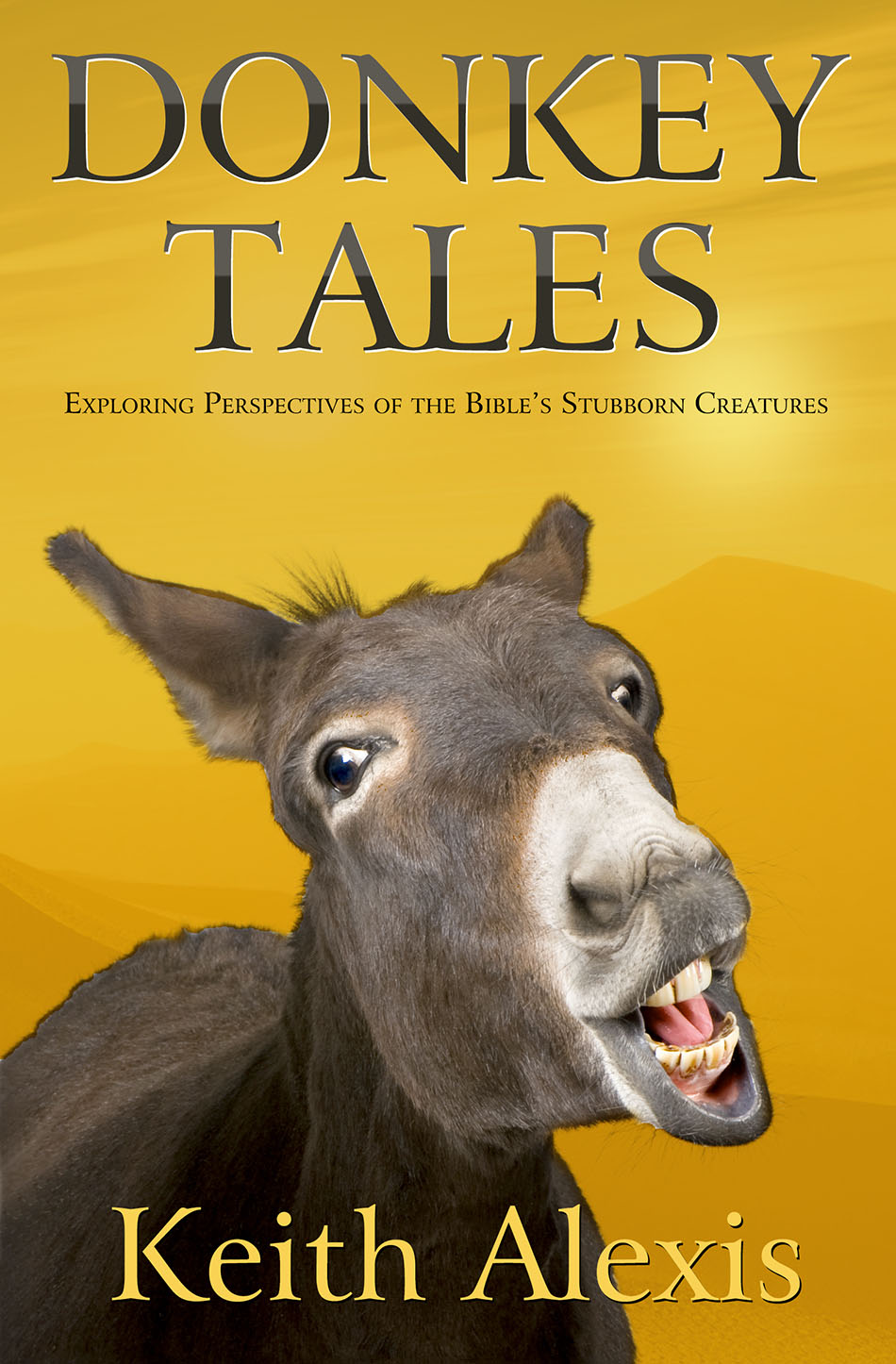
Donkey Tales is a book that brings to the forefront the often overlooked role of the donkey in Bible stories. These ten chapters highlight the donkey as the star and explores spiritual truths that their role inspires. Some of these donkeys you may already know, such as Balaam's donkey or the one upon which Jesus rode into Jerusalem. What about the donkeys of Anah and Abigail, or the donkey that stood against a lion? What can a donkey tell us about our own salvation? These are just some of the donkeys taking center stage in Donkey Tales.
The writing of this book started as an original Sunday School series for an adult Bible study. It would be great for teachers looking for something a little different. Donkey Tales would be great for book clubs and even for casual reading. It may be a little above a young reader, but teens to seniors, men and women should find it easy to be engaged by the stories.
The subject matter includes topics such as finding God's will, being productive members of God's kingdom, and navigating the dry times in our lives. Each chapter contains historical foundations for the text, insightful wisdom, real-life stories, humorous anecdotes, and illustrations on how to apply the lessons of the donkey to daily living. Interweaved throughout each chapter's content are personal stories from the author's plethora of real-life experiences lending further application for the reader.
Information
Release Date - DECEMBER 17, 2013
Published by WordCrafts Press; distributed by Ingram Book Distributors.
Follow the Facebook page
If you would like more information about the book please contact:
Keith Alexis 870-866-7724 or
Purchase in Paperback
Purchase E-Book
- Apple iBooks
- Amazon (for Kindle)
- Barnes & Noble (for Nook)
- SmashWords.com (options for all readers) - Use the "epub" version for iPad )
Information
Outside the US
SAMPLE
Introduction
I was asked to play bass guitar in a band assembled to lead worship for a young-adult retreat. A young man by the name of Jason Smith spoke at the retreat. Jason had grown up in El Dorado, Arkansas, the same town where I lived and we both attended the same church. God called Jason into full-time Christian ministry and at the time of the retreat he was serving as a youth pastor at a church in Auburn, Alabama.
On the first night of the retreat Jason used the example of the donkey Jesus rode into Jerusalem to illustrate some of the points in his message. Listening to Jason speak about the relevance of the donkey, I began thinking about all the references throughout the Bible where donkeys were present during a significant event. "There just might be some important lessons we could all learn by looking at these stories through the eyes of the donkey," I thought.
If you are a preacher or teacher you will know what I mean when I say, some points when you hear them will cause you to spin off on a maze of ideas and applications for a newly planted thought. There I was sitting in the back of the room while Jason was speaking and my mind was racing through the Bible. I wondered, "How many other donkeys in the Bible have we overlooked that just might be there to teach us some sort of deep lesson?"
On the night's drive home from the retreat I had a strong sense this idea would make a great series for the adult Sunday school class I was teaching at the time. While it might be a little out of the box to announce, we're going to study donkeys in the Bible, everyone who knows me knows I'm no stranger to coloring outside the lines. If it is in God's Word, then I believe it is there for a greater reason and we need to study in such a way to allow the Holy Spirit to speak truth into the depths of our hearts.
It is easy to fall into the rut of studying the same stories and scriptures just because they are familiar. With this in mind, the opportunity to study obscure references in the Bible and learn something from them seemed like an adventure I couldn't resist taking.
The first challenge I had to overcome was the fact I did not know anything about donkeys. The only donkey I had ever had any experience with was a three-foot-high, concrete donkey that used to stand in my grandparents' rock garden in De Leon, Texas. As a small child I rode atop the donkey, holding on tightly to its ears for all I was worth. Years later, when my daughter and son were small children, I took great pleasure in taking them to my grandparents' house to ride that same donkey. I am happy to say; today the beloved lawn ornament sits in my parents' yard waiting for another generation of riders to come along.
Have you ever noticed the many ways donkeys appear in popular culture? The most famous is, of course, Donkey from "Shrek." One of my favorites is Eeyore from "Winnie the Pooh," who was named from the sound donkeys make. If you watch retro cartoons you may recognize this one as well, Baba Looey, Quick Draw McGraw's donkey sidekick. If you remember "Grizzly Adams," Number 7 was Mad Jack's donkey. The long running variety show "Hee Haw" had a donkey mascot and in the old folk tale, "Town Musicians of Bremen," there was a donkey as the main character. In children's party games, there is only one animal to pin a tail on. As you can clearly see, there is no shortage of love for the donkey.
The very next morning my quest to research donkeys began. First, I found there were plenty of donkeys in the Bible for possible candidates. Since I had never before even touched a donkey, I thought it might be useful going forward to learn as much as I could about donkeys, especially if I planned to teach about them. I found donkeys were amazing creatures and there was a lot we could all learn from them.
Donkeys vary in height from around three to five feet at the withers, the highest point of the back which is usually at the base of the neck. The average life span of a donkey is thirty to forty years, with some living to over fifty years of age. A donkey is comparatively much stronger than a horse pound for pound. Their two main means of defense is their famous kick and a ferocious bite. Their loud bray can be heard for up to two miles away. Donkeys have a reputation for being stubborn animals, but the fact is they are intelligent, independent thinkers with a heightened sense of preservation.
Donkeys actually make decisions based on safety. Rather than just blindly obeying its master, the donkey will think about whether something is a good idea before it does it. A good donkey owner can train his donkey to obey him by gaining the trust of the animal. Once a donkey is convinced you will never do anything to hurt it, you are more likely to gain cooperation from your donkey.
It is my hope as you read through each chapter the scriptures will come alive in a new and fresh way. I know donkeys can't talk and therefore, some of what is written in the following pages are lessons revealed to me by the Holy Spirit as I studied the passages from a different perspective. It is my prayer God will use the tales from the mouth of a donkey to speak to your heart and bring encouragement to your spirit.
The time has come to place your blanket on the burro, jump on top and ride into the pages of a life-changing journey. Thanks for joining me; it's going to be one exciting ride.
Prologue
Actually, God never said, "Let there be donkeys." However, on the sixth day of the creation story found in the first chapter of Genesis God did say, "Let the earth bring forth the living creature according to its kind: cattle and creeping thing and beast of the earth, each according to its kind; and it was so."1 Donkeys definitely fall into this category and did serve a special purpose during Biblical days as you will see in the following chapters.
Several Sundays passed before I announced the next series of lessons I planned to teach were about donkeys in the Bible. As you can probably guess, a few of my witty friends (a.k.a. "wise guys") asked, "Are you going to use the original word for donkey in the lessons?" I knew what they were talking about, but I thought it would be more fun to really use the original word for donkey found in the Hebrew text. If they want to say, original, then we can't quote from the King James Version, now can we?
There are actually two Hebrew words for donkey: Chămôr, which refers to a he-donkey and 'âthôn which refers to a she-donkey. Today, the difference is marked affectionately as a jack for male donkeys, and a jenny for female donkeys.
The first domestication of donkeys was recorded in about 3,000 B.C. in or around Egypt. This proves man and donkey have a long-standing history together. Their use spread to the Middle East in about 1,800 B.C. Donkeys were in no way considered low class, rather they were a preferred method of travel. Many wealthy people rode on donkeys. Several people mentioned in the Bible as riding on donkeys also owned horses. Wealth was often marked by how many donkeys one owned. Donkeys in Biblical times were extensively used in trade as pack animals.
There are over 140 references to donkeys in the Bible. It is common to study great men and women in God's Word and learn the truths hidden in their stories. In the same way, I believe if donkeys were important enough to appear a large number of times in the Bible, there must be something we can all learn from them.
Comparing human behavior with animals is quite common. You can be busy as a bee, or sly as a fox. If you are a snake you are deceptive, but if you are an owl you are wise. We have puppy love and bear hugs from mother hens who tell you to stop monkeying around. You can be silly as a goose, but should try to avoid being as big as a whale. When someone is as hungry as a bear they may wolf down their food or even pig out. Lawyers are called vultures. Other characteristics include: quick as a rabbit, slow as a turtle, clumsy as a bull in a china closet, strong as an ox, happy as a lark, slow as a turtle, and quiet as a mouse. This said, for some reason most people do not take it complimentary when called a donkey.
Take a moment to read Genesis chapter 49. Jacob was giving a final word to all his sons. He says to his son, Issachar, He is a "strong donkey, lying down between two burdens."2 Now if my dad said, "Keith, you're a strong donkey lying down between two burdens," my first thought would be, "Huh?" Then I would try to get to the bottom of exactly what such an odd statement meant so I could decide whether to be upset or not.
Did this scripture mean Issachar was lazy and would lie down instead of work? Donkeys are known to sit or lie down if their burden is too heavy. Let's look at Issachar's story to get a clearer idea of what kind of person he was.
Issachar, the Strong Donkey
It all started when Jacob met Rachel. He loved her very much and arranged to marry her. The story goes, when Jacob asked Rachel's Dad, Laban, for her hand in marriage, Laban made Jacob promise to work on his land for seven years in order to gain his blessing. Then, Laban would give his permission for Jacob to marry Rachel. However, before this wedding could come about, Jacob was tricked into first marrying Leah, Rachel's older sister. Jacob had to work for Laban an additional seven years for Rachel.
Leah had four sons by Jacob with the hope that bearing a quartet of strapping boys would make him love her. Still, Jacob loved Rachel. Eventually four more sons were born to Jacob by the maids of both Rachel and Leah; apparently there was a competition going on.
One day Rueben, Leah's oldest son, came in from the field with some mandrakes and he gave them to his mother. When Rachel sees the mandrakes she asks Leah if she can have some of them. Leah responds, "You already have my husband, and now you want my mandrakes, too?" From this we can assume Jacob had very little to do with Leah.
Rachel comes up with a clever deal for Leah. If Leah will give Rachel the mandrakes, in exchange, Rachel will give Jacob to Leah for the night. When Jacob came home from the field that evening, Leah informed him of the deal she had made with Rachel. Jacob was Leah's for the night.
"Now what is the big deal about mandrakes?" you may ask. A mandrake is a small yellow fruit planted in the ground and grown like a potato. It was believed to have medicinal and magical powers. The literal Hebrew interpretation for the word "mandrake" was "love plant" and believed to ensure fertility. Ah ha! Rachel, still barren, was desperate to have those mandrakes in hopes they would help her become more fertile and better able to give Jacob a son, the one thing to this point, she had been unable to do. By the looks of things the mandrakes were apparently working well for Leah.
Issachar was conceived on the night Jacob was exchanged for the mandrakes and Leah declared, "God has given me my wages." The name Issachar means "he will bring reward," and from the day he was born moving forward he carried with him the stigma of being for hire.3
Moses declared a joint prophesy to Zebulun and Issachar in his final blessing given to the tribes of Israel. "Rejoice, Zebulun, in your going out and Issachar in your tents."4 After settling in Canaan, where the land of these two tribes abutted one another, Zebulun became a trader of commerce and Issachar became a keeper of the Torah studying the principles of the law.
Issachar had famous study tents in which they spent hours together studying the law. It seemed Issachar had found rest and satisfaction in the place they had carved for themselves. Even though they were often seen as lazy and choosing to take the easy way out, Issachar showed unusual insight and strength.
The tribe of Issachar was one of the first tribes to side with David over Saul. They were sensitive to the fact God had anointed another. When the kingdom was divided, they were in the Northern Kingdom, yet its members attended Hezekiah of Judah's Passover feast.5 They were true worshippers and seekers of God despite their circumstances and status. Just like Issachar had a heart to seek God, God calls each one of us to be a "strong donkey" eager to study His Word and be true worshippers who pursue Him.
The intent of this study is not just to learn about some donkeys in the Bible. It is to learn about the stories and situations surrounding the mention of the donkey. Some of these stories you will recognize, yet others you may have never known were even in the Bible. I hope you will have fun on this journey as you gain new insights into God's Word and find fresh truths to help you walk a little closer to your Savior.
Chapter 1
"The Donkey Who Carried Christ"
In 1982 I attended my first Christian rock concert. Petra was performing in Shreveport, Louisiana, on their "More Power to Ya" tour. The lights dimmed and the thickest smoke I had ever seen to date filled the arena. The stage lights danced and the thunderous music powered forth like a mighty army storming a castle. The bass rattled my insides. As the fog started to disperse, I could faintly see figures dressed in camouflage-themed outfits appear on the stage. Gripping their respective instruments with authority, the band began to play and the crowd went wild. "Now THAT'S a triumphal entrance!"
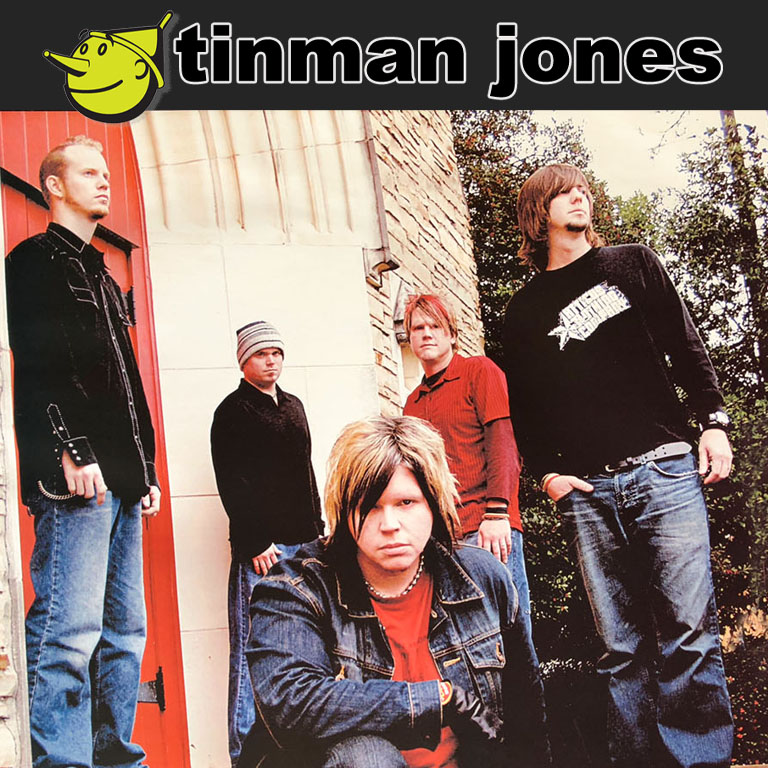
For nine years I toured as a part of the Christian band Tinman Jones. We too had a flare for the dramatic as our goal was for visual appeal to accompany our music. At the onset of each show an intro track would start to play, laying a high energy foundation to build anticipation. At one point we had samples from our namesake, "The Wizard of Oz," layered in the track. As we took our places and donned our respective instruments, the Tin Woodsman would say, "Oh! It ticks..." This was the cue for the drummer to click his sticks together to give the rest of us the cadence for the first song.
There are many ways to make an entrance on a grandiose scale. Our sports heroes often ride through the streets amidst a rain of ticker tape and fanfare. I've seen people parachute into stadiums dressed like Elvis. Often, a flowery introduction is made by a prominent figure.
What did Jesus do? He rode in on a donkey!...
Reviews
Excellent book. Would especially be great for a book club, bible study, or a Sunday school class. Keith brings new truths to bible stories you have read many times, and brings to light and life to stories you may not remember or have skimmed over, not realizing any significance. Plus, what a fun theme; I learned more about God's word and learned a lot of fun facts about this misunderstood creature to boot! Your kids will enjoy it too. I have already purchased several copies for family and friends but will be purchasing more! ~LaDonna
Excellent read! ~ Wesley
Every word of God's word is significant---even the donkeys. I love how Keith explores the Bible through the donkey's perspective and the examples of how these stories apply to our lives. A lot of food for thought throughout all 175 pages. I didn't want to put it down. Will just have to read it again. This is an awesome book for group studies as well. ~Joyce
I have to say as a prolific reader myself, you are right up there with David Jeremiah and Max Lacado and John Bevere. I have read some books that after a few chapters I thought that the author actually said all they had to say and the rest just seemed to be filler. Since I am not an author, I don't have a right to criticize, but as a reader, I want to be kept interested throughout the entire book. Yours was jammed packed full of information, humor, and spiritual insight. ~ Mary
I read the book the day i recieved it , it really hit home for especially chapter 2 . thanks for stepping up and writtng this book . ~ Michael
I am also a teacher and I enjoy digging further into God's Word to find the things He wants me to learn. I was delighted to find that experience in this book. I read through it quickly, making note of pages to go back and study. I was engaged from the first page to the last. In fact, I just ordered paperback versions for five of my best friends. Thank you, Keith. This literary gift has given me new material to study and that brings me GREAT joy. ~ Veronica
I used it for my daily devotion for one week. Written very good and excellent lessons to be learned. I highly recommend it to any reader. ~ Carol
I was fascinated by this young author's ability to tie together scriptures, background information, the donkey's perspective and personal experiences into an interesting and enjoyable read. I've been a Bible student and an avid reader for many years and I have never encountered written materials with more clarity for readers of all ages than these that keith presented in his book. It was not only interesting but enlightening; plus he write with spiritual warmth and humor. This book has great possibilities for personal reading, class materials, small group settings and sermons. I am looking forward to more books on new materials done in his fresh reader-friendly style. ~ Delores
Who knew? Donkeys are deep! Loved learning spiritual truths in this most entertaining way! I so enjoyed this book! Interesting Donkey facts woven in spiritual lessons. When the little noticed donkey in scripture is brought to life, each of them has a startling and thought provoking lesson to grasp. Each chapter explores a different donkey and gives new insite as to our spiritual purpose.. This book is an easy and entertaining read that leaves you challenged and assured you will never see a donkey the same way again! ~
A delightful book exploring Biblical truths from the perspective of the multiple donkeys God used in stories found throughout scriptures. Full of humor, insight deeply rooted in the wisdom of The Word, and hope for tomorrow Donkey Tales is a great read. This book is a perfect tool for exploring scripture through Bible Study, reading groups, or self study. I highly recommend Donkey Tales for all age groups. ~ Raschelle
Donkey Tales is an exciting book that explores Bible stories in a fresh and innovative way. Ten exhilarating chapters explore life-changing truths through the eyes of an often forgotten character within the Bible. Topical subjects include practical ways to navigate through the up’s and down’s of life. Insightful, humorous and full of delightful stories, Donkey Tales is an excellent read. This book will capture all ages and is perfect for small groups. ~ Hunter
An amazing book! It shows how God can use the simplest of things to advance his kingdom, teach us to grow in him. ~ Sue
I have perused this book and read through a lot of it. Great job! I can't wait to use it with my Bible studies! Great author! ~ Sarah
The personal stories woven throughout this easy-to-follow, direct-from-Scripture work make an already great line of study even better. I highly recommend Donkey Tales! ~ Michell
A great collection of stories, and very well told! Works well for personal devotions and group studies. ~ John
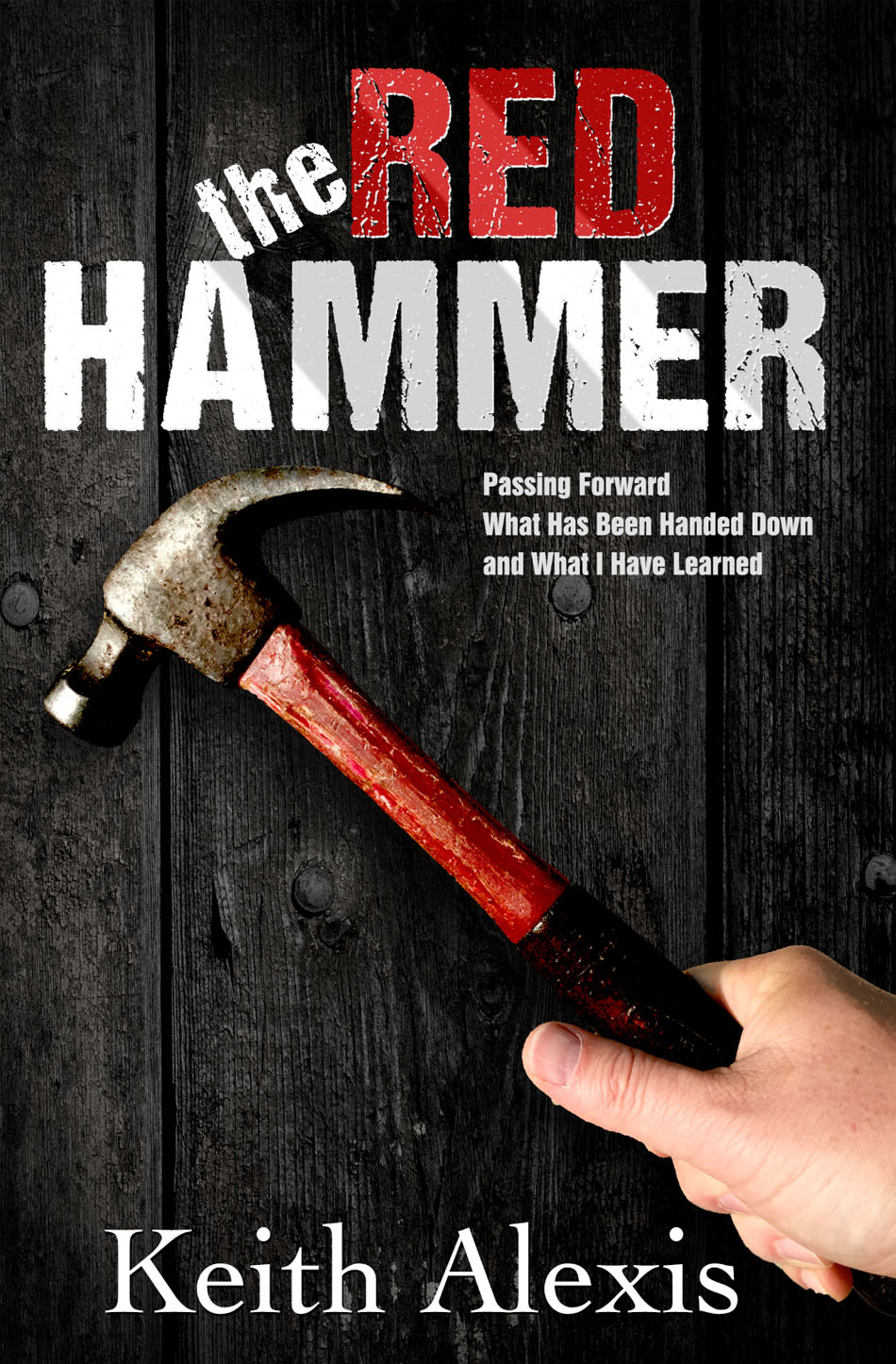
THE RED HAMMER
The Red Hammer is a symbol of wisdom handed down. We are links in the chain of time and each of us have a responsibility to pass forward the knowledge we inherit and experience we have acquired.
Solomon said to his son, “...I will teach you wisdom’s ways and lead you in straight paths. ... Take hold of my instructions; don’t let them go. Guard them, for they are the key to life.” (Proverbs 4:10-13 NLT) We all have a role to play, stepping into the shoes of those who have gone before us, listening to their words of wisdom and becoming the person God has called us to be.
The author believes life is a story, and all things both the good and bad contribute to our narratives. It is through these experiences God gives us fresh wisdom by which to teach others. This book is a collection of stories and lessons where each chapter is great for inspiration, personal study, sermons, life group devotions, Sunday school series, and more.
NEW BOOK COMING SOON
Websites You May Want to Visit


THE RED HAMMER BLOG
Passing Forward What Has Been Handed Down, and What I Have Learned
The Red Hammer is a blog of devotionals, editorials and quick thoughts to inspire and educate the reader who likes to think outside the box.